
RFID in retail has quietly moved from pilot project to standard practice in several categories, and the reason is boring rather than glamorous: shops cannot sell what the system says is missing.
Most retailers do not have a demand problem. They have a stock file that disagrees with the shelf, so replenishment is late, online orders are cancelled and staff spend their day searching the backroom.
This guide covers where tagging pays back first, what changes in daily store routines, the hardware and label choices behind it, and how to plan a rollout that survives contact with a real store.

1. Why RFID in Retail Started With Apparel

Apparel has the worst possible combination for manual counting: enormous SKU counts, size and colour variants that look identical on a shelf, and a shop floor that is reorganised every day by customers.
It also has favourable physics. Garments contain little metal and no liquid, so tags read reliably at range. That combination made clothing the first category where tagging every unit paid for itself.
Scale followed. The RAIN Alliance reports that in 2023, 50 percent of the 45 billion RAIN tags shipped went to the retail sector, supporting inventory management, supply chain management and loss prevention. You can read the breakdown on the RAIN Alliance applications page.
Grocery and general merchandise came later, because liquids, foils and metal shelving all interfere with UHF reads. Our note on RFID technology features and components covers why that happens.
2. What Item-Level Tagging Changes in Store

The single biggest shift is that stock stops being a number and becomes a list. A barcode tells you a shirt exists as a product; a serialised RFID tag tells you that specific unit is in this room right now.
- Counting becomes routine. Weekly or daily counts replace the annual stocktake, so errors are corrected while they still matter.
- Replenishment gets honest. The backroom is counted as well as the shop floor, which is where most phantom stock hides.
- Online promises get safer. An accurate store file is what makes ship-from-store and click and collect viable.
- Exceptions get names. Instead of “we are short twelve units”, you get twelve serial numbers and a last-seen location.
The operational detail of running those counts is covered in our guide to RFID stock counting, and the order-fulfilment side in RFID omnichannel fulfillment.
3. The Hardware and Label Stack

A retail deployment is usually four layers, and the label is the one people underestimate.
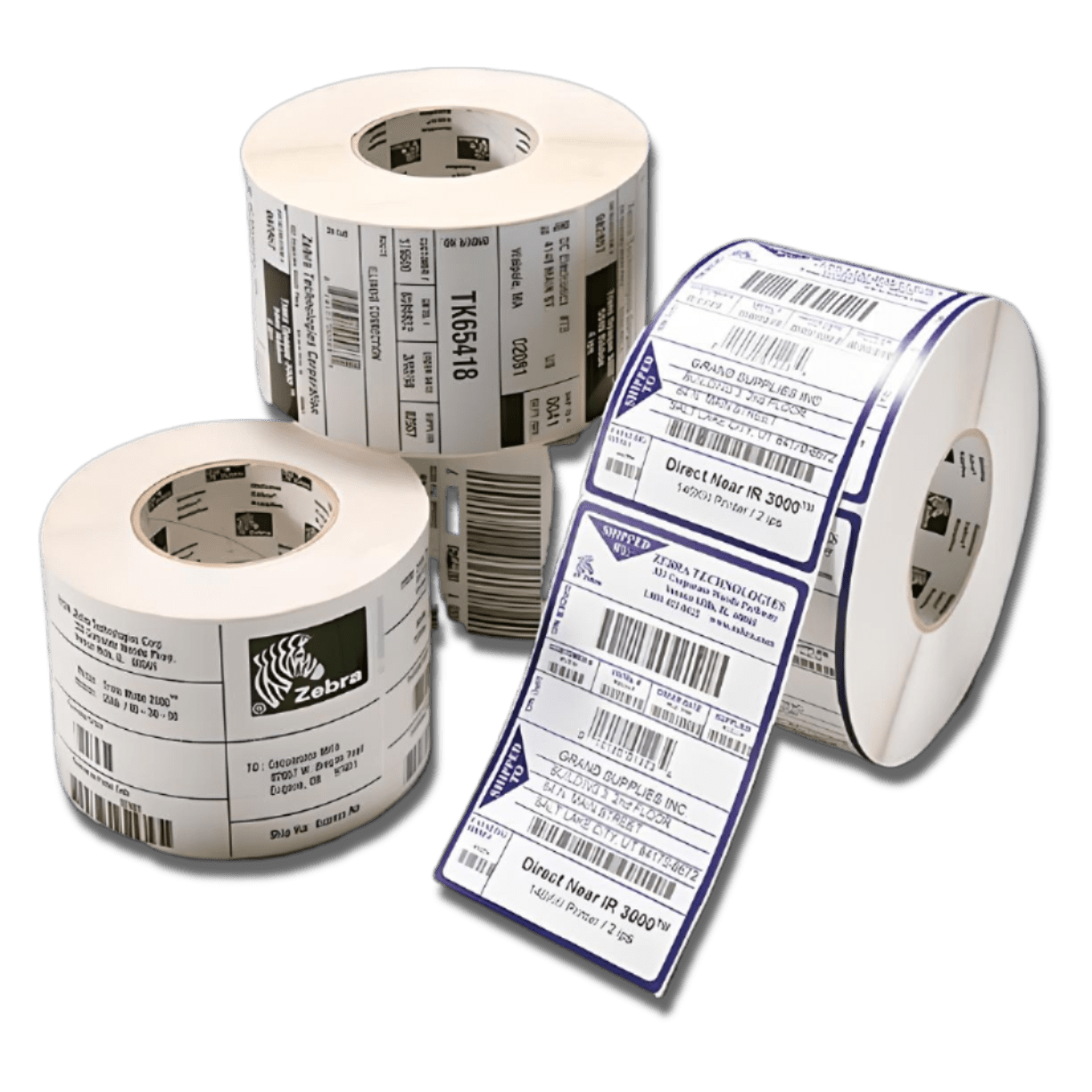
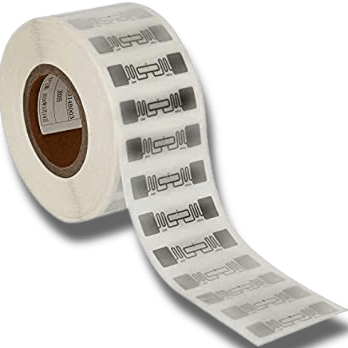
- Tags and labels. A RAIN UHF inlay converted into a hang tag, price ticket or adhesive label. Navi supplies dry inlays, wet inlays and finished RFID labels.
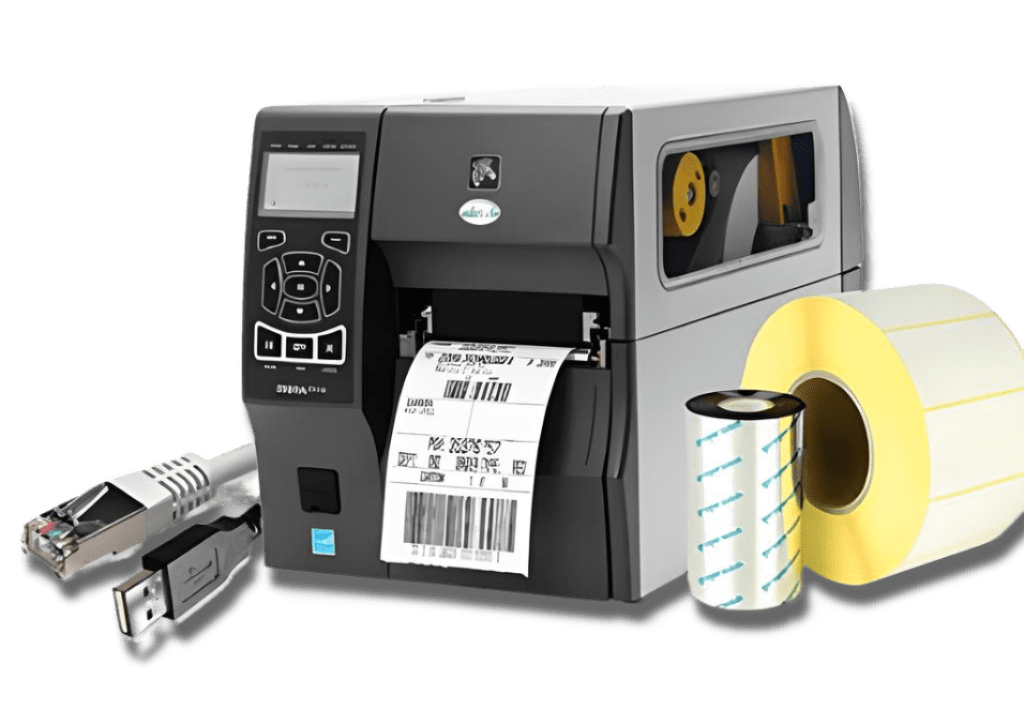
- Printing and encoding. An RFID-capable thermal transfer printer writes the serial into the chip and prints the human-readable and barcode data at the same time. See RFID printer types and functionality.
- Readers. Handhelds for counting, fixed readers at doors and fitting rooms. Our overview of reader classifications explains the trade-offs, and Navi stocks handheld RFID readers.
- Software. Middleware that filters duplicate reads, plus the integration into your stock system. This is where most of the project risk sits.
Chip choice matters more than buyers expect. Navi supplies inlays built on the Impinj M830 and NXP UCODE 8, and the antenna design around that chip is what determines whether a tag works on a dense rail.
4. Tag Formats and Where They Fit

Retailers rarely use one format across the whole assortment. Match the carrier to the product, then keep the encoding identical across all of them.
| Tag format | Typical retail use | Why it is chosen | Watch-outs |
|---|---|---|---|
| Printed adhesive RFID label | Cartons, boxed goods, general merchandise | Printed and encoded in-house on demand | Needs a clear, non-metallic application area |
| Hang tag with inlay | Apparel, footwear, accessories | Doubles as the price ticket, removed at sale | Card thickness and hole punch must miss the antenna |
| Care-label or sewn-in tag | Garments where the tag stays with the item | Survives the customer journey and returns | Raises privacy questions that need a stated policy |
| On-metal tag | Electronics, tools, display equipment | Works where a standard inlay simply will not read | Larger, more expensive, usually asset rather than sale items |
| Wet inlay applied to packaging | Supplier or third-party tagging at source | Cheapest per unit at volume | Placement discipline is entirely on the supplier |
| Reusable hard tag | High-value display stock, security tagging | Long life, strong read performance | Needs a return loop or it becomes a consumable |
Whichever carrier you pick, the data written to it must follow one agreed scheme. That is the subject of our companion piece on RFID data standards.
5. What Is Changing in Retail RFID in 2026

Four shifts are worth tracking this year, each drawn from the standards bodies and chip makers themselves.
Tag data is converging with the barcode
GS1 published EPC Tag Data Standard 2.3 in October 2025, adding encoding schemes that carry domain name information alongside the EPC so a tag can decode to a resolvable web URI. Combined with the earlier EPC+ and date-prioritised DSGTIN+ schemes, the gap between what a tag says and what a 2D barcode says is closing. Details are on the GS1 EPC Tag Data Standard page.
Privacy is becoming a chip feature
Impinj states that its M800 series endpoint ICs include a Protected Mode that makes a tag invisible to readers until it is restored with a secure PIN, alongside its Gen2X protection features. Those are vendor claims from the Impinj M800 series page, so validate the behaviour with your own readers and firmware before you build a policy around it.
Phones are becoming readers
The RAIN Alliance runs an active workgroup focused on getting RAIN reader capability into smartphones, alongside groups on sustainability and circularity and on radio regulations. If handset reading matures, the cost of putting a reader in every associate pocket changes sharply.
Retail data foundations are being formalised
GS1 is working to a published Retail Strategy for 2023 to 2027 and reports that its barcode is scanned at store checkouts over 10 billion times a day. RFID is being positioned as an extension of that identity layer rather than a parallel system, which is why encoding discipline matters more than it used to.
6. How to Plan an RFID in Retail Rollout

Rollouts fail for organisational reasons far more often than technical ones. Sequence the work like this.
- Pick one category and measure it first. Establish your current inventory accuracy by hand before tagging anything, or you will never prove the gain.
- Decide who applies the tag. Source tagging by suppliers is cheaper at scale; in-house printing gives you control while the specification is still moving.
- Lock the encoding before the first print run. Changing the scheme after a season of tagged stock is the most expensive mistake in this field.
- Test in a real store, not a lab. Metal fixtures, foil packaging and dense rails behave nothing like a test bench.
- Write the count routine into the shift plan. A reader nobody has time to use produces no data.
- Set a review date. Agree in advance what accuracy figure justifies extending to the next category.
If you are still deciding whether RFID is the right technology at all, start with our comparison of how to choose RFID technology, then move to RFID loss prevention if shrink is your main driver.
Why Work With Navi Label Solutions?
Need Help Getting RFID Into Your Stores?
Tell us the category you want to tag, the fixtures it sits on and the stock system you run today. That is enough for us to suggest an inlay, a tag carrier and a realistic first phase.
We can arrange sample tags so your team can test read rates on your own products before any commitment.

Frequently Asked Questions
Does RFID in retail replace barcodes?
No, and planning as if it will causes problems. Barcodes still run the till, the supplier catalogue and most exception handling. RFID adds serialised visibility on top. The two should carry consistent identifiers so they never disagree.
Which categories are worth tagging first?
Anything with high SKU counts, variant confusion and low metal or liquid content. Apparel, footwear, accessories and general merchandise usually qualify. Tinned goods and small electronics are harder and should come later.
Do we need suppliers to tag at source?
Eventually, if you want the lowest unit cost. Early on, printing and encoding in your own distribution centre is usually faster because you can change the specification without renegotiating with every vendor.
How long before a store sees a benefit?
The first measurable change is usually count frequency rather than money. Once you can count weekly instead of annually, accuracy improves and the commercial effects follow. Set your baseline before tagging so the change is provable.
What happens to the tag after the sale?
That is a policy decision, not a technical one. Hang tags are removed at the till; sewn-in labels stay with the garment. If tags leave the store on the product, publish a clear customer-facing statement about what the tag does and does not contain.