
Chemical drum labels have to do something ordinary labels never face: stay stuck, stay legible and stay accurate after months of UV, temperature swings, solvent splashes and, on export routes, contact with seawater.
When they fail, the cost is not a reprint. An unreadable hazard statement on a 200 litre drum becomes a safety incident, a customs hold or a refused delivery, and it usually shows up at the receiving dock rather than in your own warehouse.
This guide walks through what fails first, what BS 5609 certification actually covers, what information a hazard label must carry, how materials and print methods compare, and what changed in the rules heading into 2026.

1. Why Chemical Drum Labels Fail in Service
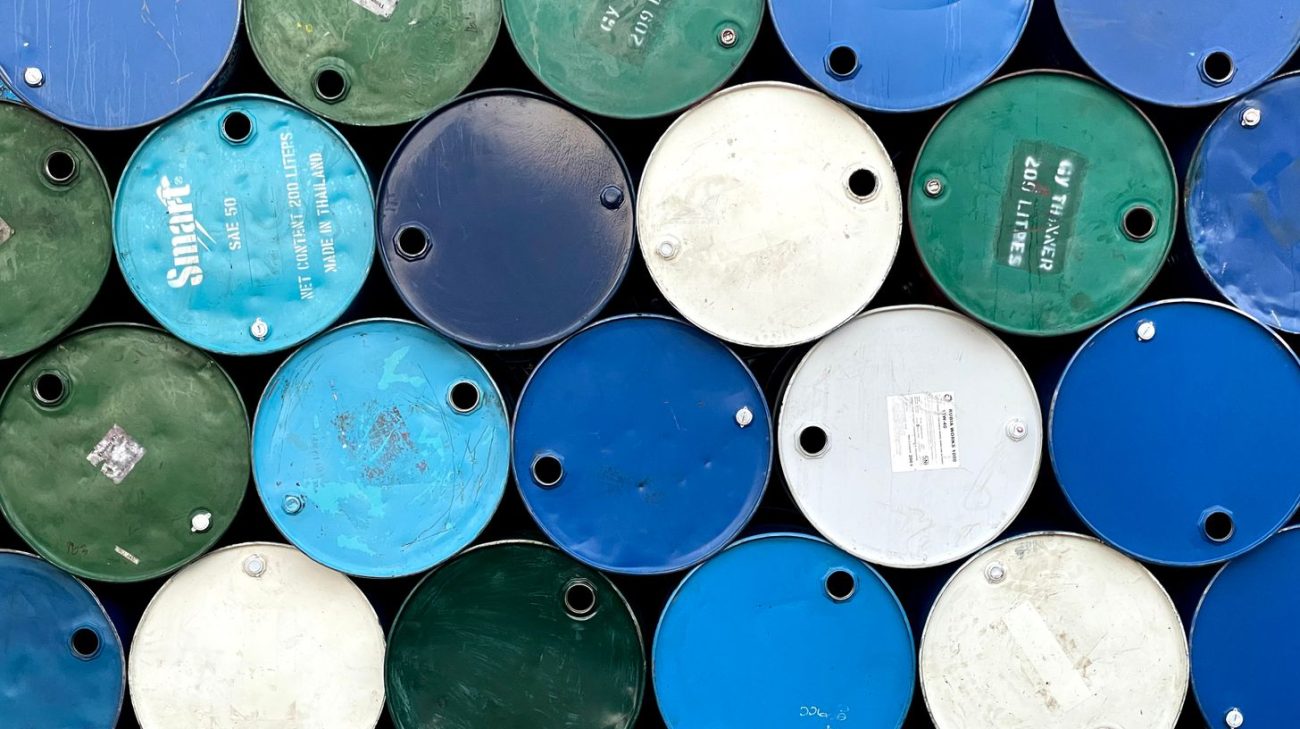
Almost every field failure traces back to one of four things, and they rarely happen in isolation.
- Adhesive mismatch. A general purpose acrylic that performs on a clean carton behaves very differently on a cold, dusty, powder-coated or slightly oily drum shoulder.
- Facestock choice. Coated paper wicks moisture, swells and tears. Once the edge lifts, the rest of the label peels within weeks.
- Print chemistry. Wax ribbon smudges under a solvent wipe. Direct thermal darkens near heat and fades in sunlight. Neither belongs on a drum that lives outdoors.
- Application conditions. Labels applied below the adhesive minimum application temperature, or onto a curved surface with the wrong die shape, never build full bond strength.
The practical test is simple. Take a labelled drum that has been outside for a season and try to read the product identifier from two metres away. If you cannot, the specification is wrong, not the operator.
2. What BS 5609 Certification Actually Covers

BS 5609 is the British Standard for printed pressure-sensitive labels used in marine environments. The current edition, BS 5609:2024, was published by BSI on 31 December 2024 under the title “Printed pressure-sensitive, adhesive-coated labels for marine use, including requirements for label stock. Specification”, and it sits under the shipbuilding and packaging ICS codes.
The standard is a durability specification, not a design rulebook. Its scope descriptors cover seawater exposure, salt-spray testing, artificial weathering, abrasion and wear, adhesion, thermal cycling, colour fastness, dimensional change and, ultimately, legibility after all of that. You can review the record on the BSI Knowledge listing for BS 5609:2024.
Two points matter when you buy. First, the standard addresses both the label stock and the printed label, so a certificate that only names a facestock tells you half the story. Second, ask your supplier for the test documentation covering the exact combination you intend to run: facestock, adhesive, printer and ribbon or ink. Change the ribbon and you have changed the tested system.
3. What Information a Hazard Label Has to Carry
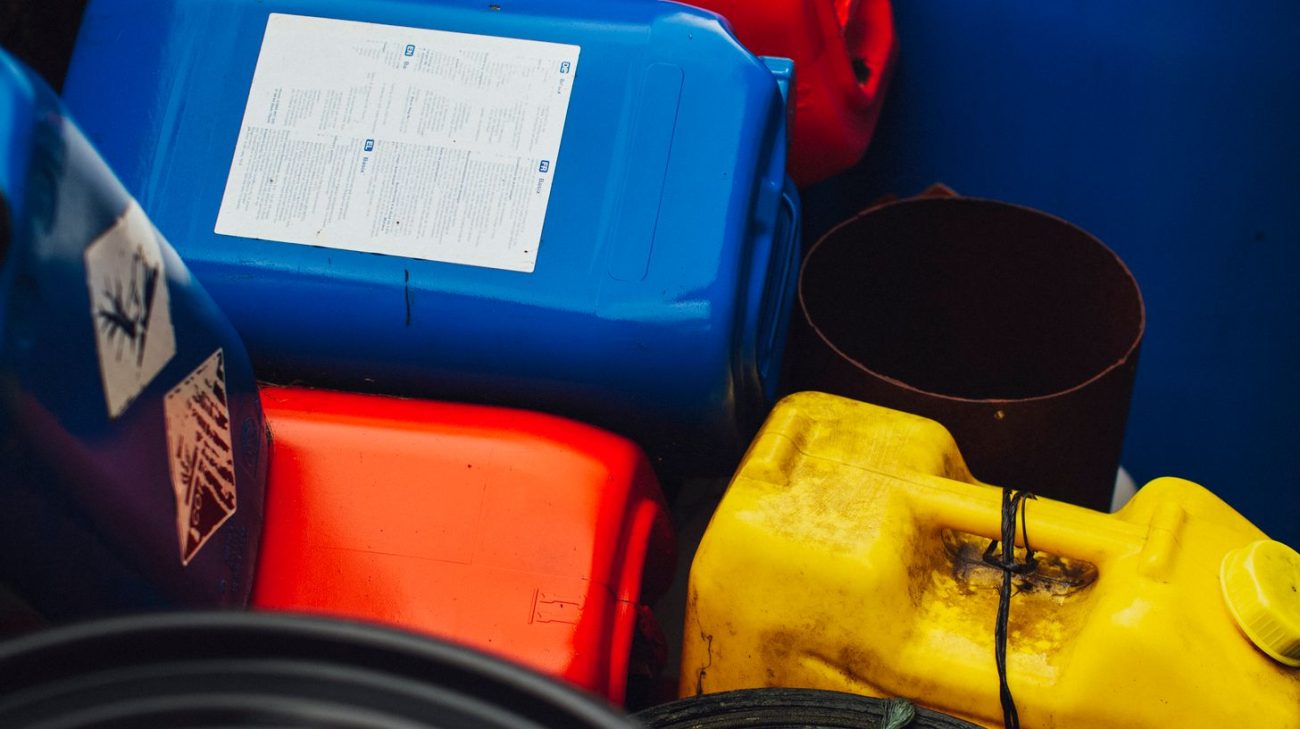
The Globally Harmonized System sets the content. Under GHS, a supplier label carries the product identifier, one or more hazard pictograms, a signal word, hazard statements, precautionary statements, and supplier identification. National rules such as the United States Hazard Communication Standard and the EU CLP Regulation implement that content with their own timing and formatting requirements.
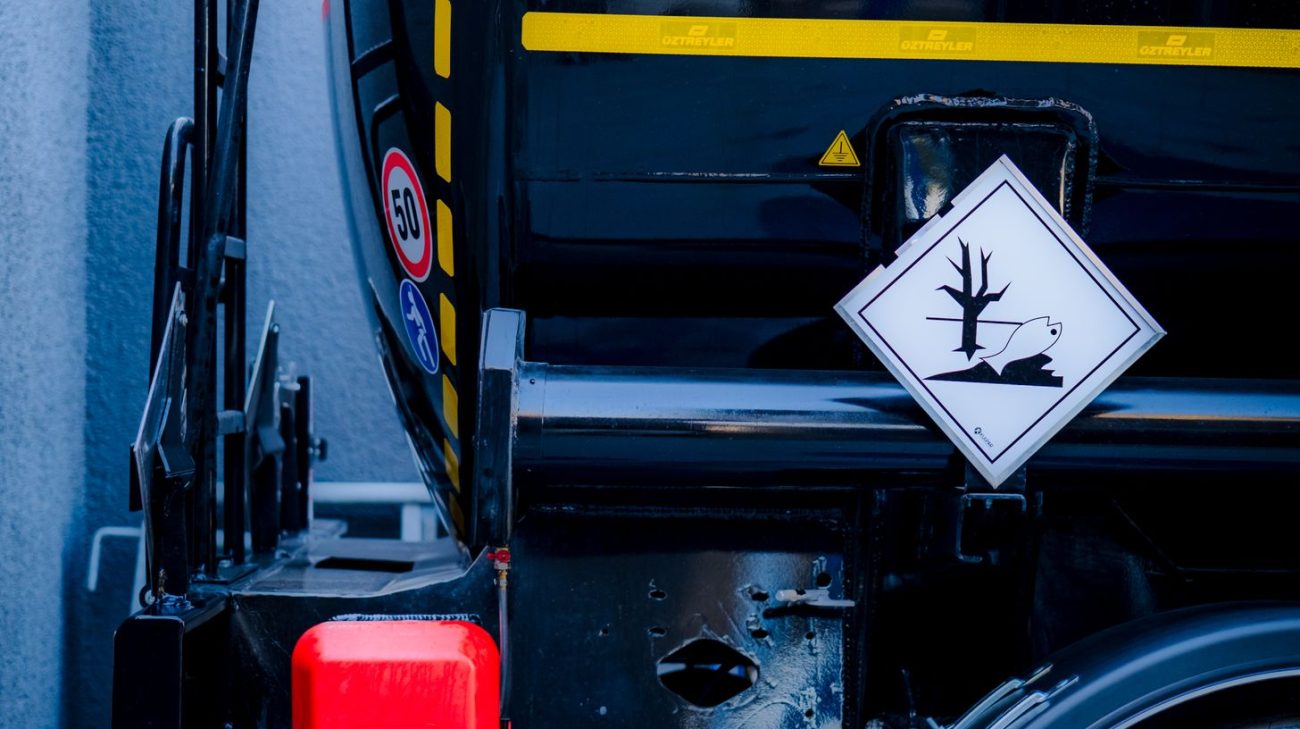
Transport marking is a separate layer. Placards, UN numbers and marine pollutant marks follow dangerous goods rules and are applied in addition to the supply label, not instead of it. Confusing the two is one of the most common causes of a rejected shipment.
- Keep the pictogram borders and proportions intact when you scale artwork down for a small drum panel.
- Leave headroom for multi-language text if the same drum ships to more than one market.
- Do not let a batch or date field overlap the hazard block, since variable data is usually the first thing an operator prints wrong.
- Check contrast, not just colour: a red diamond that has faded to orange still reads as red to a scanner but not to an inspector.
If your artwork is driven by market rules rather than by brand, our note on regulation-driven label design covers how to keep one artwork master serving several jurisdictions.
4. Label Materials and Print Methods Compared
There is no single best construction. The right answer depends on how long the drum is stored, whether it lives outdoors, what gets wiped or spilled on it, and how often the artwork changes.
| Construction | Best suited to | Strengths | Watch-outs |
|---|---|---|---|
| Coated paper plus wax ribbon | Indoor, short-life drum identification | Lowest cost, works on almost any thermal transfer printer | Wicks moisture, smudges under solvent, poor UV life |
| White polyester (PET) plus resin ribbon | Outdoor storage, solvent exposure, marine-grade candidates | Dimensional stability, abrasion and chemical resistance | Needs a matched adhesive and correct printer heat settings |
| Polypropylene (BOPP) plus wax-resin ribbon | General product and pack labels on drums kept undercover | Good moisture resistance, economical, clean print | Limited long-term UV and aggressive solvent resistance |
| Vinyl or polyethylene film | Curved, textured or slightly flexible containers | Conforms to shoulders and ribs, tolerant of surface texture | Can shrink or edge-lift over long outdoor exposure |
| Pre-printed colour label plus overlaminate | Fixed artwork with full-colour pictograms | Sharp pictograms, extra abrasion and chemical barrier | Slower to change, higher set-up, added thickness |
| Direct thermal | Short-life indoor tickets only | No ribbon to manage | Darkens with heat, fades in light, not suitable for drums |
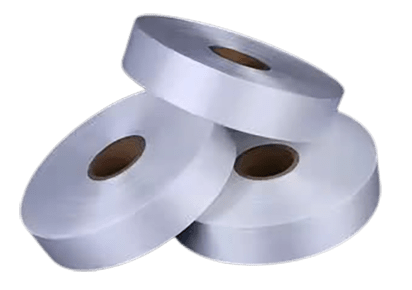
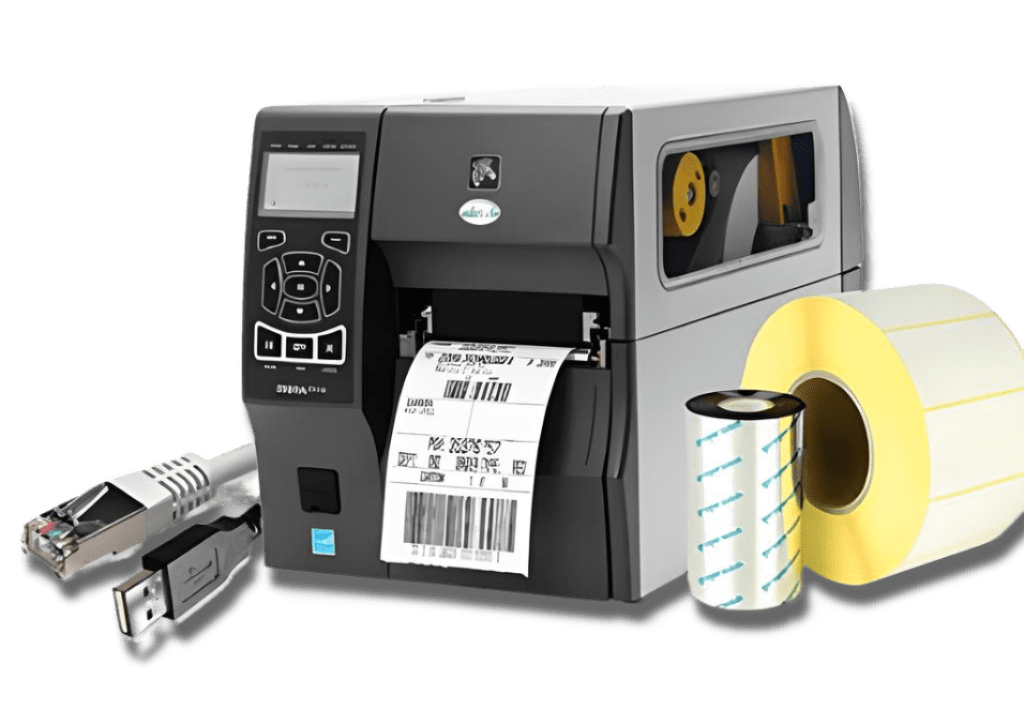
For the material side of the decision, our guide on how to choose label materials goes deeper on facestock and adhesive families, and the waterproof labels guide covers wet and washdown environments. Navi stocks polyester and nylon satin label rolls and a range of thermal transfer ribbons to pair with them.
5. What Changes for Chemical Labelling in 2026
Four developments are worth putting on your 2026 planning sheet. All of them come from the standards bodies and regulators themselves rather than from industry commentary.
OSHA moved the Hazard Communication deadlines
OSHA published its updated Hazard Communication Standard on 20 May 2024, effective 19 July 2024, aligning primarily with the seventh revision of GHS. On 15 January 2026 the agency extended the compliance dates: the deadline for evaluating certain substances moved from 19 January 2026 to 19 May 2026, and all other compliance dates shifted by four months. In the meantime, manufacturers, importers, distributors and employers may comply with the previous version, the updated standard, or both. OSHA has published the compliance date extension notice in full.
GHS Revision 11 landed in 2025
UNECE published the eleventh revised edition of GHS after amendments were adopted on 6 December 2024. Among the changes are clarified classification criteria for aerosols and chemicals under pressure, guidance for skin sensitization classification using non-animal methods, a classification for substances and mixtures that are hazardous by contributing to global warming, and further rationalisation of precautionary statements. The full text is on the UNECE GHS Rev. 11 page.
The EU rewrote how a CLP label may be laid out
Regulation (EU) 2024/2865, adopted on 23 October 2024, amends the CLP Regulation. It formally allows fold-out labels, sets minimum requirements for parameters such as font size, spacing and colour, and opens the door to digital labelling alongside the physical label. Product placed on the market before 1 January 2027 under the earlier formatting rules is not required to meet the new ones until 1 January 2029. The consolidated text is on EUR-Lex.
BS 5609 has a current edition again
After decades with the 1986 edition as the working reference, BSI published BS 5609:2024 on 31 December 2024. If your specification sheet still cites the 1986 edition by default, 2026 is the year to review which edition your customers and auditors expect to see named on the test documentation.
The practical read across all four: label content and label layout are both moving, so build artwork that can absorb a text change without a full material requalification.
6. How to Specify Chemical Drum Labels for Your Site

Work through these in order. Most specification mistakes happen because step one is skipped and a material is chosen from a catalogue instead of from the container.
- Describe the container, not the product. Substrate, surface finish, curvature, cleanliness and application temperature drive the adhesive choice more than the chemical inside does.
- Define the exposure honestly. Indoor for six weeks and outdoor for three years are different specifications. Include the worst case, including any wash or solvent wipe-down.
- Decide where marine grade is genuinely needed. If any part of the route is by sea, or any customer asks for it, specify to that level for the whole SKU rather than running two versions.
- Fix the print method before the artwork. Variable batch data and fixed colour pictograms can be split across a pre-printed base label and an overprinted panel.
- Validate on your own drums. Run a short sample, apply it in your actual conditions, and check adhesion and legibility after a realistic interval before you commit to volume.
- Record the tested combination. Facestock, adhesive, liner, printer model, ribbon type and print settings all belong on the specification sheet.
Existing chemical drum labels are often close enough that only the ribbon or the adhesive needs to change. Our overview of lubricant and chemical labels is a useful starting point when you are auditing what you already run.
Why Work With Navi Label Solutions?
Need Help Specifying Chemical Drum Labels?
Send us a photo of the drum, the storage environment and the printer you already own. That is usually enough for us to narrow the material and ribbon options down to two or three sensible candidates.
We can then arrange a sample run so your team can apply, weather and inspect the labels before anything is standardised across your sites.

Frequently Asked Questions
Is BS 5609 certification the same as GHS compliance?
No. BS 5609 is about durability, and it says nothing about what the label must say. GHS and its national implementations govern the content: pictograms, signal word, hazard and precautionary statements. A drum label can be fully GHS compliant and still fall off, and it can be marine grade and still be missing a required statement.
Do I need marine grade labels if my drums never travel by sea?
Not necessarily, but the test regime is a convenient shorthand for severe exposure. If your drums sit outdoors, get hosed down or spend months in a humid yard, specifying to the marine durability level costs less than reprinting and relabelling a batch.
Which print method survives a solvent wipe-down?
Thermal transfer with a resin-grade ribbon onto a polyester facestock is the usual answer, and an overlaminate adds another barrier. Wax ribbons and direct thermal will not survive it. Always confirm with the specific solvent you use, because resistance varies by chemistry.
Can one label design serve the EU, the United States and export markets?
Often yes, provided you plan the panel space early. The EU CLP amendment introduced fold-out label rules and minimum formatting parameters, and the United States runs its own Hazard Communication timetable, so allow room for extra text and keep the pictogram block untouched when you scale artwork.
How do I test chemical drum labels before committing to a full run?
Order a short sample roll in the exact construction you intend to buy, apply it to a real drum in your normal conditions, and leave it through the harshest part of your cycle. Check edge lift, colour fastness and whether the printed text still scans and reads at a distance.