RFID (Radio Frequency Identification) technology has become a core tool for businesses managing inventory, assets, access control, and supply chains. But not all RFID systems are the same — choosing the wrong frequency band, tag type, or system architecture can result in poor read performance, high costs, or compatibility issues.
This guide covers the key factors to evaluate, the main types of RFID tags and systems, and a step-by-step approach to selecting the right solution for your operations.
Choosing the right RFID system depends on tag type, frequency, and operating environment.
Key Factors to Consider Before Choosing an RFID System
Specific needs
Identify what you need RFID to do. Common use cases include asset tracking, inventory management, access control, supply chain visibility, and workforce management. The use case determines which frequency, tag type, and read range you need.
Operating environment
High humidity, metal surfaces, and extreme temperatures can reduce read range or cause interference. Define your environment early — an outdoor logistics yard has very different requirements from a climate-controlled warehouse.
Budget
RFID costs vary widely based on hardware, software integration, installation, and maintenance. Define your budget ceiling early — it will determine whether passive or active tags are viable and which system tier is realistic.
Compatibility
The RFID system must integrate with your existing WMS, ERP, or inventory software. Confirm compatibility before committing to a specific vendor or platform.
Data security
Access control and pharmaceutical tracking applications require encrypted data and audit trails. Ensure the system meets your security and compliance requirements.
Steps to Choose the Right RFID Technology
Define your needs — identify assets to track, operating environment, required read range, and budget.
Research available options — compare tag types, frequency bands, and hardware from reputable vendors.
Consult a vendor — work with an experienced RFID supplier who can recommend the right configuration for your environment.
Test before scaling — pilot the system in a controlled area. Test read accuracy, range, interference, and software integration.
Train your team — ensure staff understand how to operate the system and troubleshoot common issues.
Two Main Types of RFID Tags
The choice between passive and active RFID tags is one of the first decisions to make. Each type has distinct advantages depending on your read range requirements and budget.
Passive RFID Tags
No built-in power source — receives power from the RFID reader’s signal
Shorter read range (centimetres to a few metres depending on frequency)
Smaller, lighter, and significantly cheaper than active tags
Best for: inventory management, retail, access control, short-range asset tracking
Passive RFID tag — powered by reader signal.
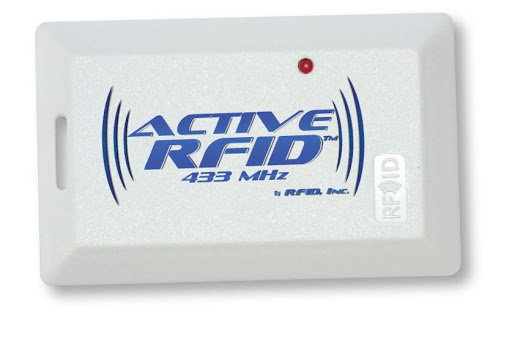
Active RFID Tags
Built-in power source (usually a battery) — broadcasts continuously
Long read range — up to 100 metres or more
Higher cost per tag; required for real-time location tracking over large areas
Best for: vehicle tracking, equipment monitoring in large facilities, high-value asset management
Active RFID tag — battery-powered for long-range tracking.
RFID Frequency Bands Explained
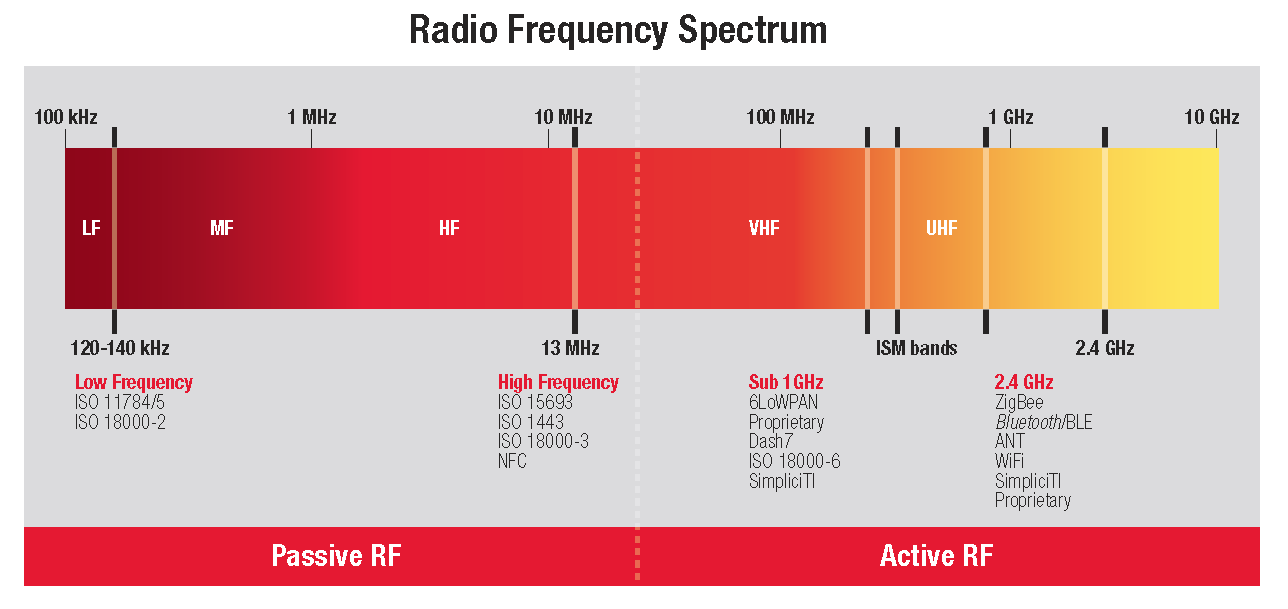
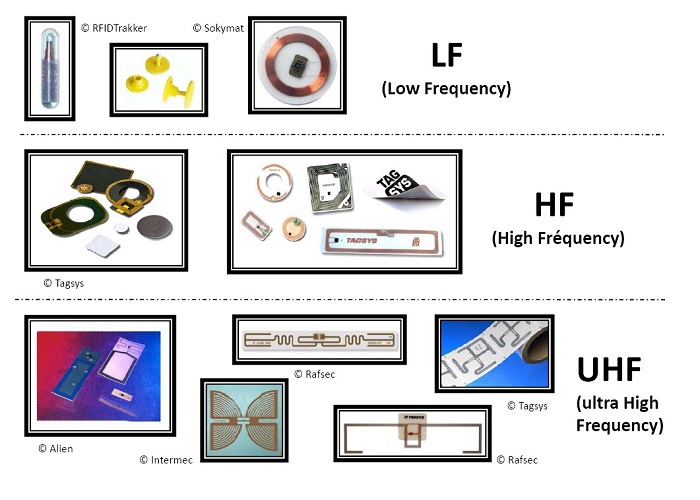
RFID systems operate across three main frequency bands. The right band depends on your read range requirement, operating environment, and application.
Low Frequency (LF) — 30 kHz to 500 kHz
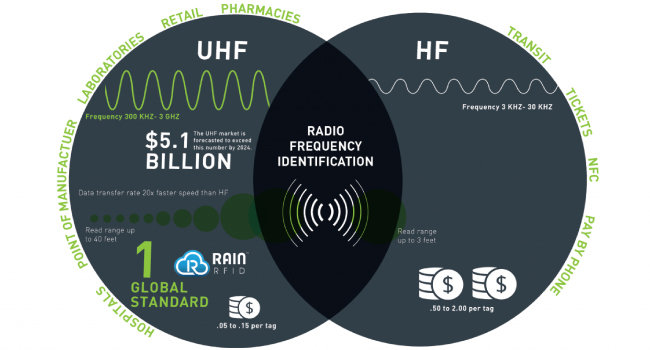
Short read range (a few centimetres to ~10cm)
Less affected by metal and liquids than higher frequencies
Slower data transfer rate
Common applications: animal identification, access control, keyless entry, asset tracking in metal-heavy environments
Low Frequency (LF) RFID — short range, metal-tolerant.
High Frequency (HF) — 3 MHz to 30 MHz
Medium read range (up to ~1 metre)
Widely used in contactless smart cards and NFC applications
Moderate data transfer speed
Common applications: payment cards, library systems, passport chips, medical device tracking, event ticketing
High Frequency (HF) RFID — used in smart cards and NFC applications.
Ultra High Frequency (UHF) — 300 MHz to 3 GHz
Long read range (1–12 metres passive; much further active)
Fast data transfer; reads multiple tags simultaneously
The most widely adopted band for logistics and supply chain
Microwave RFID (above 2.4 GHz) can achieve read ranges of several kilometres — used in toll collection and vehicle identification. Selection depends on desired read range, environment, and budget.
Ultra High Frequency (UHF) RFID — the standard for warehouse and supply chain.
Which RFID System is Right for Your Use Case?
Use Case
Tag Type
Frequency
Warehouse inventory
Passive
UHF
Retail shelf management
Passive
UHF
Access control
Passive
LF or HF
Payment / smart cards
Passive
HF
Vehicle / equipment tracking
Active
UHF or Microwave
Pharmaceutical track & trace
Passive
HF or UHF
Cold chain / outdoor logistics
Active or Passive
UHF
If your use case spans multiple environments, consult a vendor to design a hybrid system that addresses each area separately.
What to Look for in an RFID Vendor
Proven experience — the vendor should have deployments in environments similar to yours
Scalable systems — confirm the system can grow with your business without full replacement
Integration support — the vendor should assist with connecting RFID to your existing software
Maintenance and servicing plan — a clear support structure reduces downtime when issues occur
Transparent pricing — total cost of ownership should include hardware, software, installation, and ongoing support
Choosing the right RFID technology takes time but pays off in reduced errors, lower labour costs, and better operational visibility.
Frequently Asked Questions
What is the difference between passive and active RFID?
Passive tags have no power source and are activated by the reader’s signal — cheaper and smaller. Active tags have a built-in battery and broadcast continuously — longer read range but higher cost.
Which RFID frequency is best for warehouse management?
UHF (Ultra High Frequency) is the industry standard for warehouse and supply chain. It supports long read ranges, fast bulk scanning, and integrates with most WMS platforms.
Can RFID work around metal or liquid surfaces?
Metal and liquids can interfere with certain frequencies. UHF is most affected; LF is most tolerant. Specialist on-metal RFID labels are designed to perform on metallic surfaces.
Do I need to replace my barcode system to use RFID?
Not necessarily. RFID and barcodes can coexist. Many businesses run hybrid systems — using barcodes where manual scanning is sufficient and RFID where bulk or automated scanning adds value.
Can Navi Label Solutions help me select and deploy an RFID system?
Yes. Our team can advise on tag selection, frequency bands, hardware, and integration based on your environment and budget. Contact us to discuss your requirements.
Need help choosing the right RFID system?
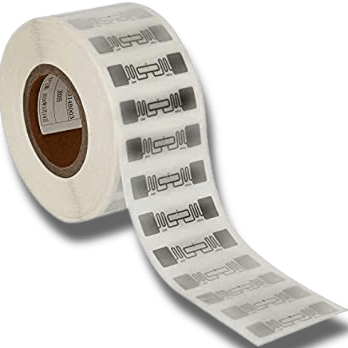
Our team can assess your environment, recommend the right tag type and frequency band, and help you plan a deployment that fits your budget. We supply RFID labels and inlays for a wide range of applications.