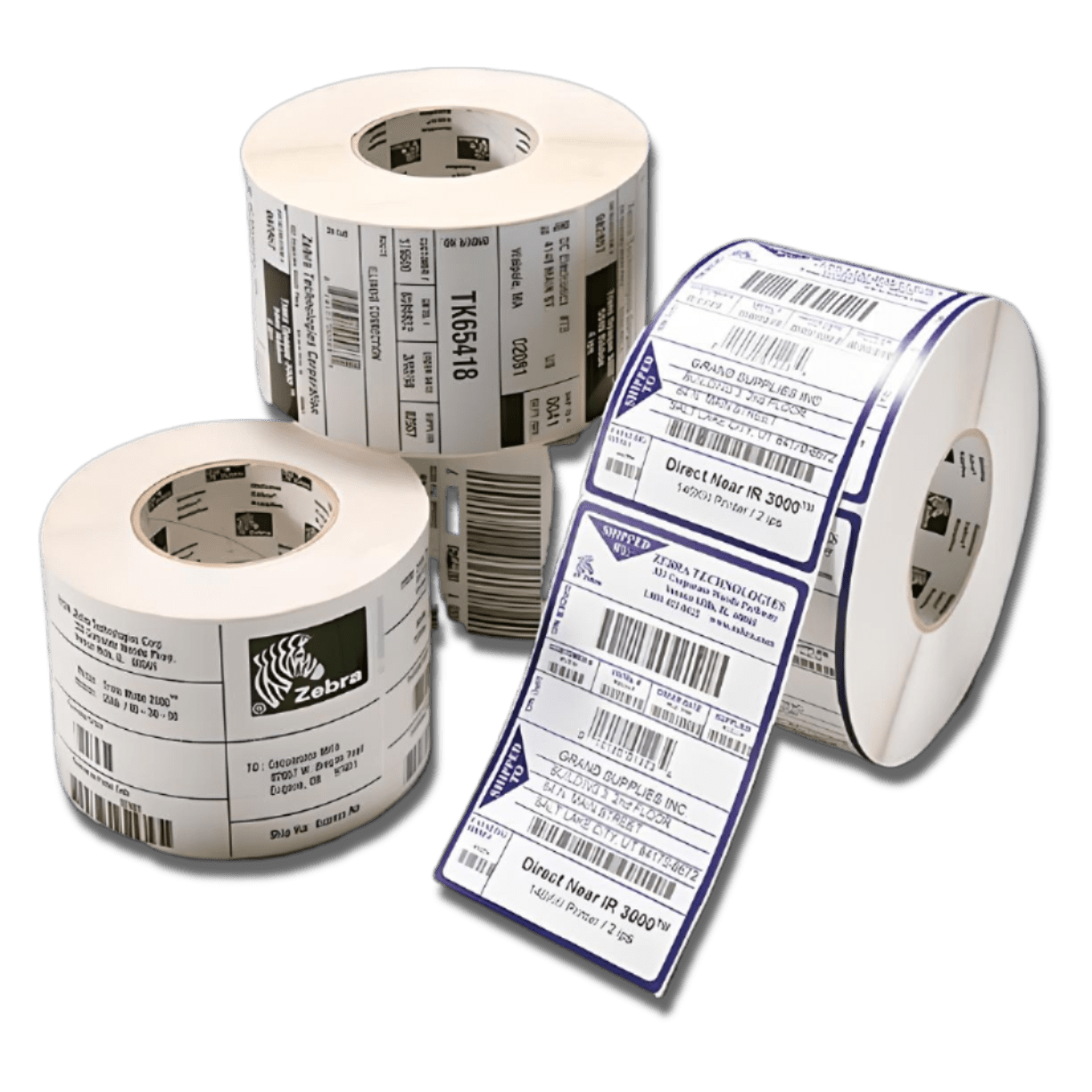
RFID medical waste tracking is transforming how hospitals, clinics, and healthcare facilities manage hazardous solid waste. It supports the safe handling practices recommended by the World Health Organization, and a reliable rollout starts with choosing the right labels for your products.
RFID (Radio-Frequency Identification) is transforming how hospitals, clinics, and healthcare facilities manage medical solid waste. Unlike traditional paper-based tracking, RFID delivers real-time visibility over every waste container from the point of generation through to final disposal — reducing human error, improving regulatory compliance, and protecting staff and communities from exposure to hazardous materials.
Why Medical Solid Waste Requires Specialized Management
Medical solid waste is not ordinary waste. The WHO categorizes it into eight distinct types, each requiring different handling, storage, and disposal procedures:
- Sharps — needles, scalpels, broken glass; highest injury risk
- Infectious waste — contaminated swabs, tissues, lab cultures
- Pathological waste — human tissue, organs, blood
- Pharmaceutical waste — expired or unused medicines
- Chemical waste — solvents, disinfectants, batteries
- Radioactive waste — materials from radiotherapy procedures
- Genotoxic waste — cytotoxic drugs used in chemotherapy
- General non-regulated waste — standard waste from healthcare premises
When waste types are incorrectly classified, mixed, or go untracked, entire batches can become contaminated — increasing disposal costs and exposing staff and the public to serious health risks.
Traditional tracking approaches fail in several key ways:
- Loss of control — Without automated tracking, facilities lose visibility over which containers are where, what they contain, and when they were last collected.
- Document falsification risk — Paper waste manifests can be altered, lost, or forged — creating compliance gaps that only surface during audits.
- Contamination from misclassification — When different waste types are mixed, entire loads require treatment as hazardous, driving up costs.
- Unauthorized access and staff exposure — Without movement records, unauthorized handling of hazardous waste goes undetected, increasing needle-stick injury risk.
How an RFID Medical Waste System Works
An RFID medical waste management system operates through five stages:
Step 1 — Tag each container at the point of generation
Each waste bin or container is fitted with a durable, moisture-resistant UHF RFID tag encoding the waste origin, type, collection date, and responsible handler. UHF RFID tags maintain 98.3% read accuracy even in high-humidity hospital environments.
Step 2 — Fixed readers at key checkpoints
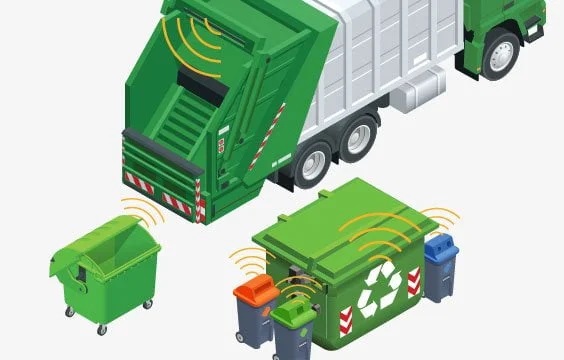
RFID readers installed at doorways, storage areas, and loading docks automatically detect containers as they enter or leave each zone — no line of sight or manual scanning required. Every movement is timestamped and logged.
Step 3 — Handheld scanning for mobile rounds
Waste collection staff use handheld RFID readers during collection rounds to verify container identity, confirm waste type, and log handler activity in real time.
Step 4 — Central management dashboard
All data flows to a cloud-based platform providing real-time container locations, movement history, dwell times, and handler records. The system automatically generates waste manifests and complete chain-of-custody documentation.
Step 5 — Alerts and exception management
If a container enters an unauthorized area, exceeds a storage time threshold, or disappears from the system, an alert is triggered — enabling immediate response before a compliance or safety incident occurs.
Key Applications of RFID in Medical Waste Management
Container and bin tracking
Every bin is tracked from the moment waste is deposited through collection, transport, treatment, and final disposal. Facilities know exactly where each container is at all times, eliminating the “lost bin” problem that causes compliance failures and operational delays.
Waste classification and segregation
RFID tags encode waste category data that is verified automatically at each checkpoint, preventing incorrect mixing of waste types. Pilot programs using AI-enhanced RFID classification have achieved 93.1% accuracy in waste type identification.
Staff accountability and activity logging
Every staff interaction with a waste container is recorded — who handled it, when, and where. This creates an auditable record of waste collection activity, supporting both staff safety management and regulatory inspections.
Access control for hazardous areas
RFID readers at waste storage rooms restrict entry to authorized personnel only, preventing accidental or unauthorized contact with hazardous materials. Access attempts by unauthorized staff are logged and can trigger immediate alerts.
Route optimization for collection efficiency
RFID data on container fill levels and movement patterns enables waste collection routes to be optimized. Studies show route optimization through RFID-enabled tracking has reduced collection distances by 18%, lowering fuel costs and staff hours.
Chain of custody documentation
The complete waste journey — from generation point to certified disposal facility — is documented automatically, with timestamps and digital signatures at each transfer point. This satisfies regulatory requirements without manual paperwork.
Regulatory compliance reporting
RFID systems generate compliant waste manifests and movement reports automatically, ready for submission to health authorities or review during audits. Timestamped exception alerts provide evidence of proactive compliance management.

Quantified Benefits of RFID in Medical Waste Operations
Real-world deployments of RFID in healthcare waste management have produced measurable results:
- 30.1% reduction in waste collection time
- 81% fewer hazardous waste mixing incidents
- 40.2% reduction in sharps injuries to staff
- Weighing error rate reduced from 5% to 0.5%
- Bin loss rate reduced to below 3%
- 40% increase in overall collection efficiency
- 60% reduction in manual inspection costs
- 18% reduction in collection route distances
These results come from documented hospital network deployments. Individual results will vary based on facility size, existing systems, and implementation quality.
What You Need to Implement an RFID System
A complete RFID medical waste management system requires:
Hardware
- UHF RFID tags — moisture-resistant, durable tags attached to waste containers; choose tags rated for the temperature and humidity ranges in your facility
- Fixed RFID readers — installed at doorways, storage rooms, loading docks, and treatment areas
- Handheld RFID readers — for mobile collection rounds and bin verification
- Access control hardware — RFID-enabled door locks or gates for restricted areas
Software
- Central tracking dashboard — real-time location and status of all containers
- Manifest and reporting module — automated generation of regulatory documents
- Alert and exception system — notifications for missing containers, dwell time breaches, and unauthorized access
- Integration with hospital information systems — connects waste tracking data to broader facility management
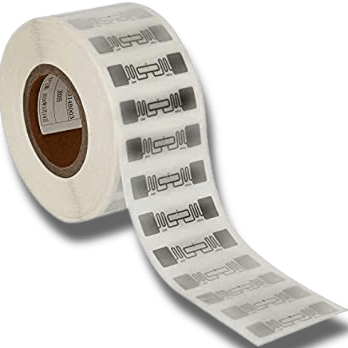
Navi Label Solutions supplies RFID labels and inlays suited for medical waste container tagging. Our team can advise on the right tag specification for your facility’s operating environment.
Frequently Asked Questions
What type of RFID tag is best for medical waste bins?
UHF RFID tags are the industry standard for waste container tracking. Look for moisture-resistant tags rated for hospital environments — these maintain read accuracy above 98% even in high-humidity storage areas. Tag size and attachment method depend on your container type.
Can RFID track waste containers across multiple facilities?
Yes. Cloud-based RFID tracking platforms can aggregate data from multiple sites into a single dashboard, giving healthcare networks visibility across hospitals, clinics, and treatment facilities in real time.
Does RFID replace paper manifests?
RFID systems generate digital manifests automatically, significantly reducing manual paperwork. Whether paper manifests are still required depends on local regulations — check with your relevant health authority for current requirements in your region.
How does RFID reduce sharps injuries to staff?
By tracking container fill levels and movement patterns, RFID enables timely collection before bins become overfull — a leading cause of sharps injuries during handling. Access control features also prevent unauthorized staff from handling containers without proper protective equipment.
What is chain of custody in medical waste management?
Chain of custody is the documented record of who handled waste, when, where, and in what condition — from the point of generation through to certified disposal. RFID systems generate this documentation automatically, making it available for regulatory audits at any time.
Can Navi Label Solutions supply RFID tags for medical waste management?
Yes. We supply RFID labels and inlays suitable for waste container tracking applications. Contact us with your container type, facility size, and operating environment and our team will recommend the right product.
Ready to improve your medical waste tracking?
Navi Label Solutions supplies RFID labels and inlays for healthcare facilities. Tell us your container type, facility size, and operating environment — our team will recommend the right solution.